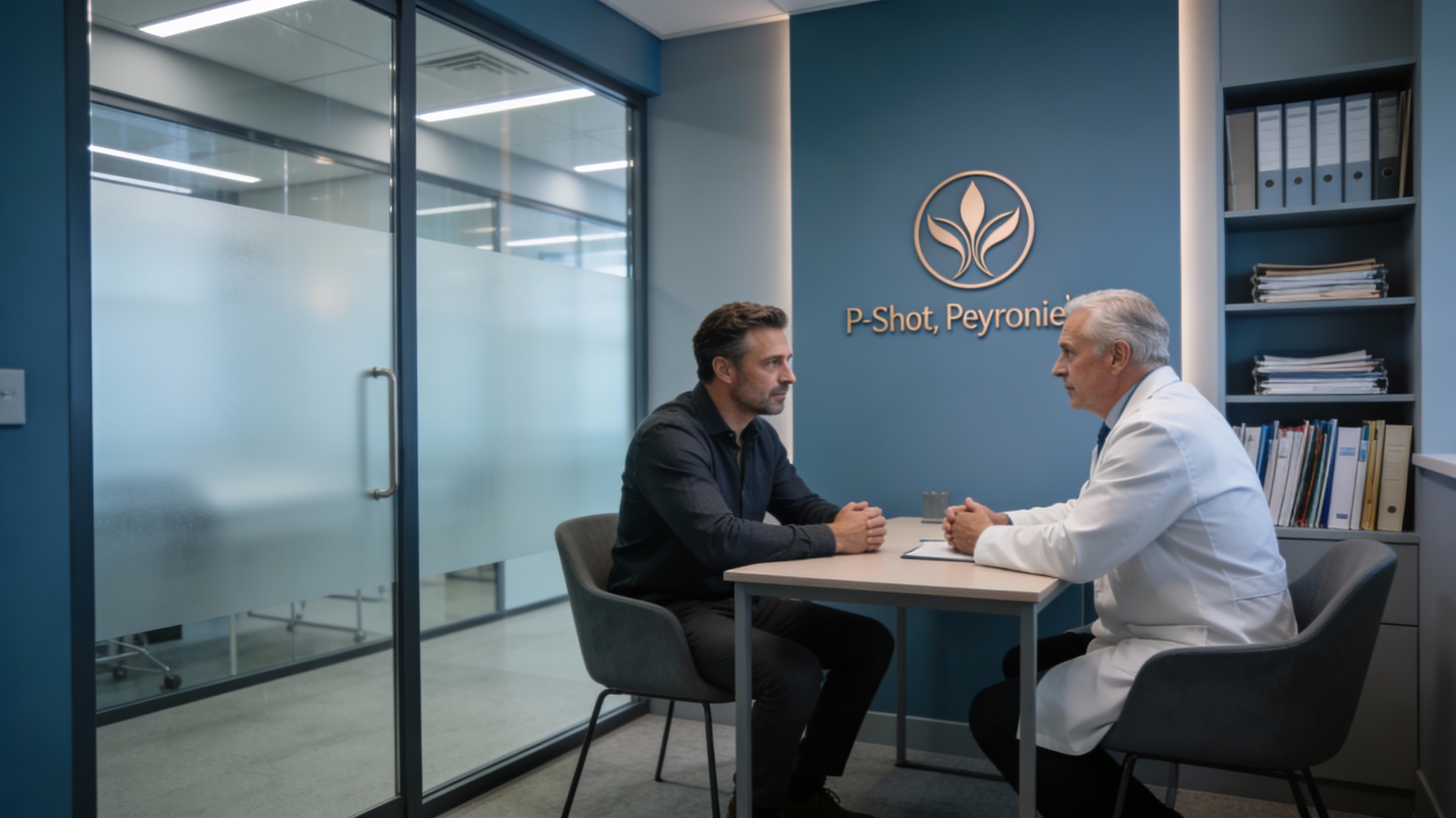
Understanding Peyronie’s Disease Without the Hype
Men who notice penile curvature often delay seeking help—not because the problem is minor, but because the information online is confusing, exaggerated, or overly surgical. Peyronie’s disease sits at the intersection of physical change and emotional discomfort, and many men quietly wonder whether newer treatments like the P-Shot are appropriate—or simply another over-promised solution.
What Actually Causes Penile Curvature?
Peyronie’s disease develops when fibrous scar tissue forms within the penile shaft, usually after repeated micro-trauma during sex or reduced tissue healing with age. Over time, this scar tissue limits elasticity, leading to curvature, discomfort, and in some cases erectile dysfunction. The condition is not rare, but it is frequently misunderstood.
Where the P-Shot (PRP) Fits Medically
The P-Shot—also known as the Priapus Shot—uses platelet-rich plasma (PRP) derived from the patient’s own blood. PRP contains growth factors that support tissue repair, circulation, and cellular signalling. In Peyronie’s disease, PRP does not dissolve plaque, but it may help improve surrounding tissue health, reduce inflammation, and support erectile quality when used in carefully selected patients.
What PRP Can and Cannot Do for Peyronie’s
It is important to be precise. PRP is not a replacement for surgery in severe curvature, nor does it mechanically straighten the penis. However, in early or mild cases—especially where erectile dysfunction, pain, or reduced sensitivity are present—PRP may play a supportive role as part of a broader, conservative treatment plan.
P-Shot vs Surgery, Traction, and Medication
Surgery aims to correct shape but carries permanent structural change. Traction devices require long-term daily commitment with variable compliance. Oral medications have limited evidence in established Peyronie’s. PRP sits in a different category: regenerative rather than corrective, non-surgical, and drug-free—making it appealing to men who want to avoid irreversible intervention.
Why Doctor-Led Assessment Matters
Not every man with curvature is a suitable candidate for a P-Shot. Factors such as plaque stability, degree of bend, erectile function, diabetes, and vascular health all influence outcomes. In the UK, proper diagnosis, ultrasound assessment, and anatomical expertise are essential—particularly when injections are involved in a sensitive vascular structure.
UK Perspective: Separating Evidence from US Marketing
Much of the online hype around the P-Shot originates from the US, where regulation and advertising standards differ. In UK practice, PRP is positioned cautiously, ethically, and within GMC-aligned clinical frameworks. Men deserve realistic expectations, transparent pricing, and treatment plans based on anatomy—not marketing claims.
A Thoughtful Way to Look at Treatment Decisions
For men with Peyronie’s disease, the question is rarely “What’s the fastest fix?” but rather “What is appropriate for my body, my symptoms, and my long-term function?” When approached conservatively and clinically, regenerative treatments like PRP can have a role—but only when guided by experience and proper medical judgement.
Frequently Asked Questions (FAQ)
Can the P-Shot straighten a bent penis?
No. PRP does not mechanically straighten the penis. It may support tissue health and erectile quality in selected cases.
Is PRP painful or risky?
When performed by an experienced doctor, discomfort is minimal and risks are low, as PRP uses your own blood.
Who should NOT consider a P-Shot for Peyronie’s?
Men with severe curvature, unstable plaques, or those seeking immediate cosmetic correction may require other treatments.
How much does a P-Shot cost in London?
Prices typically start from around £1,200, depending on assessment, technique, and follow-up—consultation quality matters more than discounts.